
As advanced materials continue to transform modern industries, SAT NANO has been actively supporting researchers and manufacturers with high-quality Molybdenum aluminum boron MoAlB MBene powder. Derived from the layered ternary boride phase MoAlB, MBene materials represent a new family of two-dimensional compounds with remarkable electrical conductivity, thermal stability, oxidation resistance, and catalytic activity. These unique characteristics have positioned MoAlB MBene powder as a promising candidate for next-generation batteries, supercapacitors, electromagnetic shielding, sensors, catalysts, and other high-performance applications.
Molybdenum Aluminum Boron (MoAlB) MBene powder is attracting growing attention due to its exceptional combination of metallic conductivity, ceramic-like durability, and two-dimensional layered structure. This article explores its composition, properties, manufacturing process, advantages, industrial applications, and future development potential. Whether you are a researcher, materials engineer, or procurement professional, understanding the value of MoAlB MBene powder can help identify new opportunities in advanced materials innovation.
MoAlB is a layered ternary boride composed of molybdenum (Mo), aluminum (Al), and boron (B). It belongs to a unique family of materials that exhibit characteristics between metals and ceramics. Through selective etching techniques, the aluminum layers can be partially removed, producing two-dimensional MBene structures similar to MXenes.
The resulting MBene powder exhibits enhanced surface area, active sites, conductivity, and chemical reactivity while retaining excellent thermal and structural stability. These features make it highly attractive for energy storage, catalysis, and advanced functional devices.
One of the defining characteristics of MoAlB is its layered orthorhombic crystal structure. The alternating atomic layers create strong covalent bonding within layers and relatively weaker bonding between layers, facilitating exfoliation into MBene nanosheets.
| Component | Function |
|---|---|
| Molybdenum (Mo) | Provides electrical conductivity and mechanical strength |
| Aluminum (Al) | Acts as an etchable layer for MBene production |
| Boron (B) | Enhances hardness, thermal stability, and oxidation resistance |
The combination of these elements creates a highly stable framework capable of operating in challenging environments where conventional nanomaterials may fail.
MoAlB MBene powder demonstrates a remarkable range of performance characteristics.
| Property | Typical Characteristics |
|---|---|
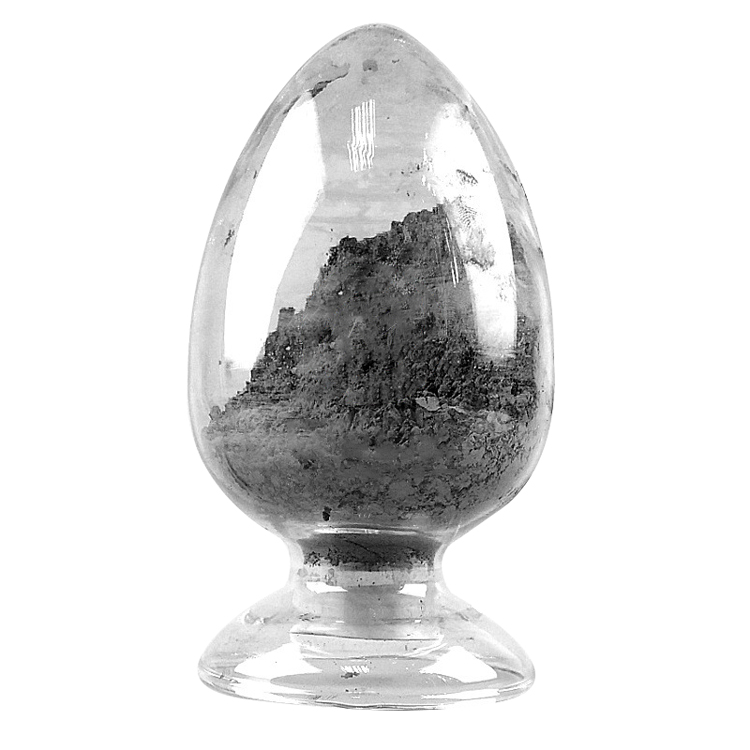
| Appearance | Gray to black powder |
| Crystal Structure | Layered orthorhombic |
| Electrical Conductivity | Excellent |
| Thermal Stability | High temperature resistant |
| Oxidation Resistance | Superior compared with many 2D materials |
| Surface Activity | High active surface area |
| Mechanical Strength | Excellent durability |
These properties allow MoAlB MBene powder to function effectively in demanding industrial and scientific environments.
Compared with conventional nanomaterials, MoAlB MBene powder offers several significant advantages:
These benefits make MoAlB MBene powder an attractive solution for next-generation technologies requiring both performance and reliability.
The preparation process generally involves two major stages:
High-purity molybdenum, aluminum, and boron powders are mixed in controlled stoichiometric ratios and subjected to high-temperature sintering. This process forms the layered MoAlB ceramic phase.
Specific chemical treatments selectively remove aluminum layers, creating ultrathin MBene nanosheets. Additional exfoliation techniques help separate individual layers and increase surface area.
The final product is washed, purified, and dried to obtain high-purity MBene powder suitable for research and industrial use.
MoAlB MBene powder has demonstrated tremendous potential across multiple sectors.
Its high conductivity and active surface area contribute to improved charge transfer and energy storage efficiency.
The unique surface chemistry provides numerous catalytic active sites, making it an attractive alternative to expensive noble metal catalysts.
The conductive layered structure effectively absorbs and reflects electromagnetic waves, helping protect sensitive electronic equipment.
Researchers are exploring MoAlB MBene powder for gas sensors, chemical sensors, and biosensors due to its large surface area and excellent electronic response.
Adding MBene powder to polymers, ceramics, and metal matrices can improve conductivity, strength, thermal management, and wear resistance.
| Material | Conductivity | Thermal Stability | Oxidation Resistance | Catalytic Potential |
|---|---|---|---|---|
| Graphene | Excellent | Moderate | Moderate | Moderate |
| MXenes | Excellent | Good | Limited | High |
| MoS₂ | Moderate | Good | Good | High |
| MoAlB MBene | Excellent | Excellent | Excellent | Very High |
This comparison highlights why MBene materials are increasingly viewed as a valuable complement or alternative to existing two-dimensional materials.
The global demand for advanced nanomaterials continues to grow rapidly, driven by renewable energy technologies, electric vehicles, smart electronics, and sustainable manufacturing.
Several research directions are expected to accelerate commercialization:
As production technologies mature, MoAlB MBene powder is likely to become a critical material in future high-tech industries.
MoAlB MBene originates from layered boride structures, whereas MXenes are derived from carbide and nitride MAX phases. MBenes often demonstrate improved oxidation resistance and thermal stability.
Its high conductivity, large surface area, and abundant active sites help improve charge transport and storage performance in batteries and supercapacitors.
Yes. The material shows strong potential in electrocatalytic reactions such as hydrogen evolution and oxygen evolution processes.
Yes. Its ceramic-metal hybrid characteristics provide exceptional thermal stability and oxidation resistance under elevated temperatures.
Energy storage, electronics, aerospace, catalysis, sensors, electromagnetic shielding, advanced composites, and research institutions can all benefit from this advanced material.
Molybdenum Aluminum Boron MoAlB MBene powder represents an exciting advancement in the field of two-dimensional materials. Combining exceptional conductivity, thermal stability, oxidation resistance, and catalytic performance, it offers significant opportunities across energy, electronics, sensing, and industrial manufacturing sectors. As research continues to expand and production methods improve, MBene materials are expected to play an increasingly important role in next-generation technologies.
Looking for a reliable supplier of high-purity Molybdenum Aluminum Boron MoAlB MBene Powder? Contact us today to discuss your research or production requirements. SAT NANO provides premium nanomaterials, technical support, customized specifications, and dependable global delivery services to help accelerate your innovation and commercial success.