
As nanotechnology continues to reshape modern industries, Bismuth Oxide Nanopowder has emerged as a highly promising nanomaterial due to its exceptional electrical, optical, catalytic, and chemical properties. As a leading nanomaterial supplier, SAT NANO provides high-purity Bismuth Oxide Nanopowder designed for applications in energy storage, photocatalysis, sensors, electronics, environmental remediation, and advanced ceramics.
This article explores the properties, manufacturing methods, advantages, application fields, technical specifications, and future development trends of Bismuth Oxide Nanopowder while helping researchers and industrial buyers understand why this nanomaterial is becoming increasingly important in cutting-edge technologies.
Bismuth Oxide Nanopowder refers to ultra-fine particles of bismuth oxide (Bi₂O₃) with particle sizes typically ranging from a few nanometers to less than 100 nanometers. Due to its nanoscale dimensions, the material exhibits unique physicochemical characteristics that differ significantly from conventional micron-sized bismuth oxide powders.
Bi₂O₃ is known for its high refractive index, excellent dielectric properties, remarkable photocatalytic performance, and environmental friendliness compared to many heavy-metal-based alternatives. These characteristics make it highly attractive for next-generation technologies.
The nanoscale structure provides Bismuth Oxide Nanopowder with enhanced surface activity and improved functionality across various applications.
| Property | Description | Industrial Significance |
|---|---|---|
| High Surface Area | Large active surface compared to bulk materials | Improves catalytic efficiency |
| Photocatalytic Activity | Responsive under visible light | Useful in environmental purification |
| High Refractive Index | Excellent optical performance | Suitable for optical devices |
| Semiconductor Characteristics | Unique electronic structure | Supports sensor and electronic applications |
| Thermal Stability | Maintains performance at elevated temperatures | Ideal for advanced ceramic systems |
| Low Toxicity | More environmentally friendly than lead-based materials | Supports green manufacturing initiatives |
Although specifications may vary according to application requirements, high-quality Bismuth Oxide Nanopowder generally possesses the following characteristics:
| Parameter | Typical Value |
|---|---|
| Chemical Formula | Bi₂O₃ |
| Purity | 99.9% – 99.99% |
| Particle Size | 30nm – 100nm |
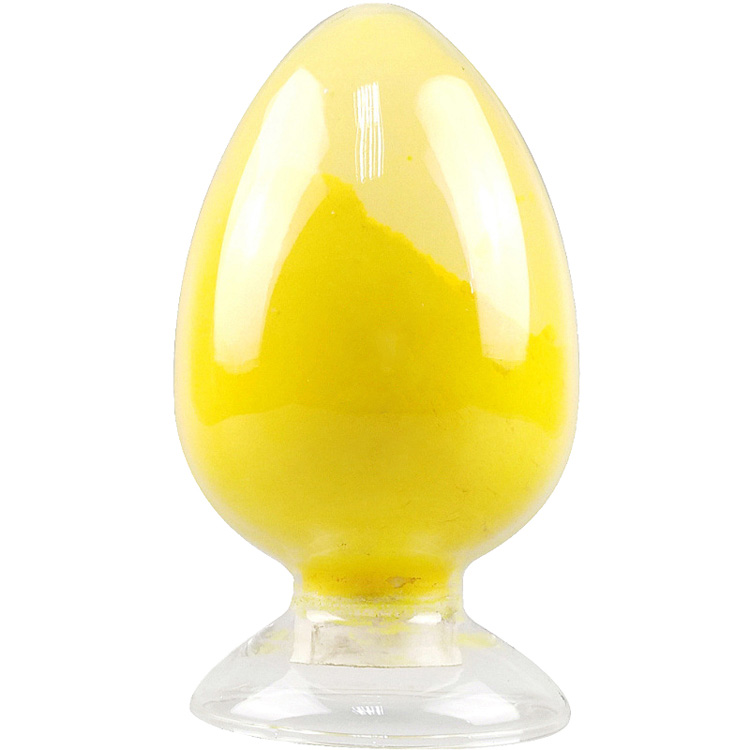
| Appearance | Yellow Powder |
| Crystal Structure | Various phases available |
| Specific Surface Area | High Surface Area Range |
| Density | Approximately 8.9 g/cm³ |
Manufacturers often customize particle size distribution, purity level, and surface treatment to meet specialized industrial requirements.
Several advanced synthesis methods are used to produce high-quality Bismuth Oxide Nanopowder:
The selection of synthesis technology directly influences particle size, crystal phase, surface area, and overall performance.
Compared with traditional oxide materials, Bismuth Oxide Nanopowder offers several notable advantages:
These benefits make the material increasingly attractive for both research institutions and industrial manufacturers.
One of the most important uses of Bismuth Oxide Nanopowder is photocatalytic degradation of organic pollutants. Under visible-light irradiation, Bi₂O₃ can generate electron-hole pairs capable of decomposing harmful contaminants in wastewater and air.
Researchers are actively investigating Bi₂O₃ nanomaterials for next-generation energy storage devices.
The large surface area enhances charge transfer and electrochemical performance.
Due to favorable dielectric and semiconductor properties, Bismuth Oxide Nanopowder is incorporated into various electronic devices.
The material's high refractive index enables utilization in advanced optical systems.
Nanostructured Bi₂O₃ demonstrates excellent sensitivity toward specific gases, making it suitable for sensor manufacturing.
Bismuth Oxide Nanopowder is widely used as a sintering aid and functional additive in high-performance ceramics.
| Feature | Bismuth Oxide Nanopowder | Conventional Bismuth Oxide Powder |
|---|---|---|
| Particle Size | Nanometer Scale | Micrometer Scale |
| Surface Area | Very High | Lower |
| Catalytic Activity | Excellent | Moderate |
| Reaction Efficiency | High | Lower |
| Dispersion Performance | Superior | Average |
| Application Potential | Advanced Technologies | Traditional Uses |
This comparison highlights why many industries are transitioning from conventional powders to nanoscale materials.
When sourcing Bismuth Oxide Nanopowder, buyers should evaluate several critical factors:
Working with experienced nanomaterial manufacturers can significantly improve product reliability and long-term project success.
The global nanomaterials market continues to expand rapidly, creating new opportunities for Bismuth Oxide Nanopowder across multiple sectors.
Future research is expected to focus on:
As industries pursue cleaner and more efficient technologies, demand for advanced bismuth-based nanomaterials is likely to increase significantly.
Bismuth Oxide Nanopowder is widely used in photocatalysis, energy storage, sensors, optical materials, advanced ceramics, electronics, and environmental remediation systems.
Nanoparticles possess a significantly larger surface area relative to their volume, resulting in enhanced reactivity, improved catalytic performance, and better functional efficiency.
Compared with many lead-based compounds, bismuth oxide is generally considered a safer and more environmentally acceptable alternative for numerous applications.
Yes. Professional manufacturers often provide customized particle sizes, purity levels, and surface modifications to satisfy specific industrial requirements.
It should be stored in sealed containers within a cool, dry environment away from moisture and contamination sources to maintain product quality.
The strongest growth is expected from renewable energy, environmental protection, advanced electronics, smart sensing technologies, and next-generation functional materials.
Bismuth Oxide Nanopowder has become one of the most versatile nanomaterials available today, offering exceptional photocatalytic activity, semiconductor functionality, optical performance, and environmental advantages. Its growing adoption in energy storage, advanced electronics, sensors, environmental remediation, and high-performance ceramics demonstrates its significant commercial and technological value.
If you are searching for reliable, high-purity Bismuth Oxide Nanopowder solutions for research or industrial production, SAT NANO can provide customized specifications, stable product quality, and professional technical support. Whether you require standard materials or tailored nanomaterial solutions for specialized applications, contact us today to discuss your project requirements and discover how our advanced nanomaterials can help accelerate your innovation and business success.