
Magnesium Oxide Nanopowder has emerged as one of the most versatile nanomaterials in modern industries due to its outstanding thermal stability, high purity, excellent catalytic activity, antibacterial performance, and electrical insulation properties. As a professional nanomaterial supplier, SAT NANO provides high-quality Magnesium Oxide Nanopowder with consistent particle size distribution and customizable specifications for research laboratories, advanced manufacturing, energy technologies, ceramics, catalysts, electronics, and biomedical applications. This guide explores its properties, manufacturing methods, industrial applications, advantages, selection tips, and future development trends to help engineers, researchers, and procurement professionals make informed decisions.
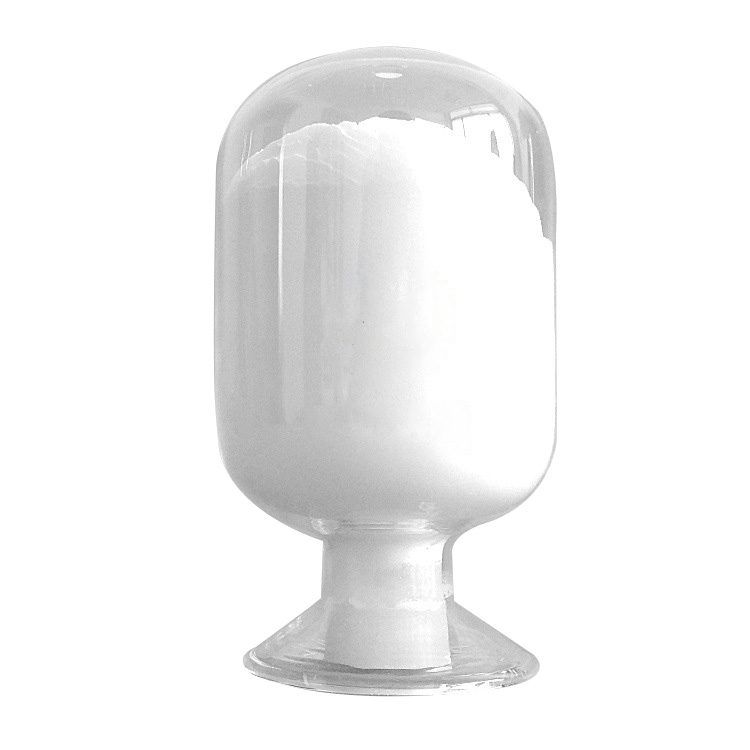
Magnesium Oxide Nanopowder is a nanoscale form of magnesium oxide (MgO) with particle sizes typically ranging from 20 nm to 100 nm. Compared with conventional magnesium oxide powders, nanoparticles possess significantly higher specific surface area, enhanced surface activity, improved catalytic performance, and superior adsorption capability. These unique characteristics enable the material to play an increasingly important role in nanotechnology, advanced ceramics, catalysts, environmental protection, electronics, coatings, and biomedical research.
Because nanoparticles exhibit quantum size effects and increased surface energy, Magnesium Oxide Nanopowder delivers performance that cannot be achieved by traditional micron-sized powders. Engineers increasingly use this advanced material when developing lightweight, durable, and multifunctional products that demand high precision and excellent stability.
Modern production technologies also allow manufacturers to tailor particle size, purity, morphology, and surface modification according to specific industrial requirements. This flexibility makes Magnesium Oxide Nanopowder suitable for both laboratory research and large-scale commercial manufacturing.
Understanding the physical and chemical characteristics of Magnesium Oxide Nanopowder helps manufacturers determine whether it is suitable for demanding industrial applications.
| Property | Typical Value | Industrial Benefit |
|---|---|---|
| Chemical Formula | MgO | High chemical stability |
| Particle Size | 20–100 nm | Large surface area |
| Purity | 99%–99.99% | Reliable performance |
| Appearance | White Powder | Easy processing |
| Melting Point | Approximately 2852°C | Outstanding thermal resistance |
| Crystal Structure | Cubic | Excellent structural stability |
These outstanding characteristics make Magnesium Oxide Nanopowder a preferred material in applications where high-temperature resistance, electrical insulation, chemical durability, and catalytic activity are simultaneously required.
The performance of Magnesium Oxide Nanopowder depends heavily on the synthesis technology used during production. Advanced manufacturing methods enable better control over particle size, morphology, crystallinity, purity, and dispersion.
Several industrial preparation techniques are widely adopted today, each offering unique advantages for different production scales and application requirements.
Chemical precipitation remains one of the most economical and scalable manufacturing methods. Magnesium salts react with alkaline solutions under controlled temperature and pH conditions, producing precursor compounds that are subsequently calcined to obtain high-purity Magnesium Oxide Nanopowder.
This method offers excellent production efficiency and relatively low manufacturing costs while maintaining consistent particle size distribution suitable for commercial applications.
The sol-gel process provides exceptional control over particle uniformity and purity. During hydrolysis and condensation reactions, highly homogeneous oxide networks are formed before heat treatment converts them into crystalline MgO nanoparticles.
Researchers often select this technique when producing nanomaterials for precision electronics, catalysts, and advanced ceramic components because it minimizes impurities and allows fine control of nanostructure.
Hydrothermal technology utilizes high-pressure aqueous environments to produce highly crystalline nanoparticles with controlled morphology. Compared with conventional processes, hydrothermal synthesis often results in better particle dispersion and fewer structural defects.
Materials prepared using this technique are widely used in catalyst supports, biomedical research, environmental purification, and functional coatings requiring excellent surface activity.
Thanks to its nanoscale dimensions and exceptional physicochemical properties, Magnesium Oxide Nanopowder has become an indispensable material across numerous high-tech industries. Its combination of high thermal stability, excellent electrical insulation, chemical resistance, and strong surface activity allows engineers to improve product performance while reducing material consumption.
Below are some of the most important application fields where Magnesium Oxide Nanopowder continues to demonstrate significant commercial value.
Magnesium Oxide Nanopowder is widely incorporated into advanced ceramic formulations to improve density, fracture toughness, thermal shock resistance, and mechanical strength. The nanoparticle size promotes more uniform sintering, enabling manufacturers to produce high-performance ceramic components with fewer defects.
Because of its large specific surface area and abundant active sites, Magnesium Oxide Nanopowder serves as both an efficient catalyst and a catalyst support. It enhances catalytic efficiency in chemical synthesis, petroleum refining, environmental remediation, and renewable energy production.
Its excellent thermal stability also helps catalysts maintain activity under demanding operating conditions.
Electronic manufacturers value Magnesium Oxide Nanopowder for its superior dielectric properties and excellent insulation performance. It is commonly used in electronic ceramics, insulating coatings, dielectric layers, and heat-management materials where electrical reliability is essential.
The high adsorption capability of Magnesium Oxide Nanopowder enables effective removal of heavy metal ions, acidic gases, dyes, and various pollutants from industrial wastewater and exhaust emissions. It also contributes to sustainable environmental technologies by improving purification efficiency.
Researchers have demonstrated that nanoscale magnesium oxide exhibits strong antibacterial activity against a broad spectrum of microorganisms. As a result, it is increasingly incorporated into antimicrobial coatings, medical devices, food packaging materials, and hygienic products.
Adding a small percentage of Magnesium Oxide Nanopowder to polymers, plastics, rubbers, and composite materials can significantly improve mechanical strength, thermal conductivity, flame resistance, and dimensional stability while maintaining lightweight characteristics.
Compared with conventional magnesium oxide powders, nanometer-scale MgO offers substantial performance advantages that support next-generation industrial innovation.
| Feature | Conventional MgO | Magnesium Oxide Nanopowder |
|---|---|---|
| Particle Size | Micron level | 20–100 nm |
| Surface Area | Lower | Much higher |
| Catalytic Activity | Moderate | Excellent |
| Dispersion | Average | Superior after surface treatment |
| Industrial Efficiency | Standard | Higher performance with lower dosage |
The nanoscale structure enables more efficient interactions with surrounding materials, making Magnesium Oxide Nanopowder particularly attractive for high-value manufacturing industries seeking improved product performance and lower operating costs.
Choosing the right supplier is just as important as selecting the appropriate particle size. Purchasing managers and research institutions should evaluate several technical indicators before making procurement decisions.
A trusted manufacturer should provide complete technical documentation, consistent quality control, customizable specifications, and stable production capacity to ensure reliable long-term supply.
As an experienced nanomaterial manufacturer, SAT NANO supplies multiple grades of Magnesium Oxide Nanopowder suitable for research laboratories, universities, advanced manufacturing, catalyst production, ceramics, electronic materials, batteries, environmental engineering, and biomedical innovation. Customized particle sizes, purity levels, and surface modifications are available to meet specialized application requirements.
The global demand for Magnesium Oxide Nanopowder is expected to continue growing as industries pursue lightweight materials, cleaner manufacturing technologies, renewable energy systems, and high-performance electronic devices.
Several emerging technologies are creating new opportunities for nanoscale magnesium oxide, including solid-state batteries, advanced semiconductor packaging, hydrogen energy, environmental catalysis, biomedical engineering, and next-generation functional coatings.
At the same time, improvements in nanomaterial production technologies are making high-purity Magnesium Oxide Nanopowder more affordable and accessible to manufacturers worldwide. Continuous innovation in surface modification, particle dispersion, and scalable synthesis processes will further expand its industrial applications over the coming years.
Magnesium Oxide Nanopowder is widely used in advanced ceramics, catalyst supports, electronics, thermal interface materials, environmental treatment, antibacterial coatings, polymer composites, battery materials, and biomedical research. Its nanoscale structure provides enhanced surface activity and improved performance compared with conventional magnesium oxide powder.
Commercial Magnesium Oxide Nanopowder is typically available in particle sizes ranging from 20 nm to 100 nm. Other particle sizes and customized specifications can be produced according to specific research or industrial requirements.
Nanoparticles possess a significantly larger specific surface area, higher catalytic activity, improved adsorption capability, better dispersion, and enhanced antibacterial performance. These advantages make Magnesium Oxide Nanopowder more effective in demanding applications where material efficiency and functional performance are critical.
When handled according to appropriate laboratory or industrial safety procedures, Magnesium Oxide Nanopowder is considered a stable material. Personnel should wear suitable personal protective equipment (PPE), avoid inhaling airborne particles, and store the material in a cool, dry, and sealed environment to maintain product quality.
Yes. SAT NANO offers customized solutions based on customer requirements, including particle size, purity, surface modification, dispersion treatment, packaging options, and bulk supply. Technical support is also available to help customers select the most suitable Magnesium Oxide Nanopowder for their specific applications.
Whether you are developing next-generation electronic materials, advanced ceramics, catalysts, energy storage systems, or innovative research projects, choosing a reliable nanomaterial supplier is essential for long-term success. SAT NANO is committed to delivering premium Magnesium Oxide Nanopowder with consistent quality, high purity, customizable specifications, and dependable global supply. Our experienced technical team is ready to support your project from material selection to large-scale production. If you are looking for a trusted partner to enhance your products with advanced nanotechnology, contact us today to discuss your requirements, request technical information, or receive a competitive quotation. We look forward to helping you achieve greater innovation and performance with our high-quality nanomaterials.