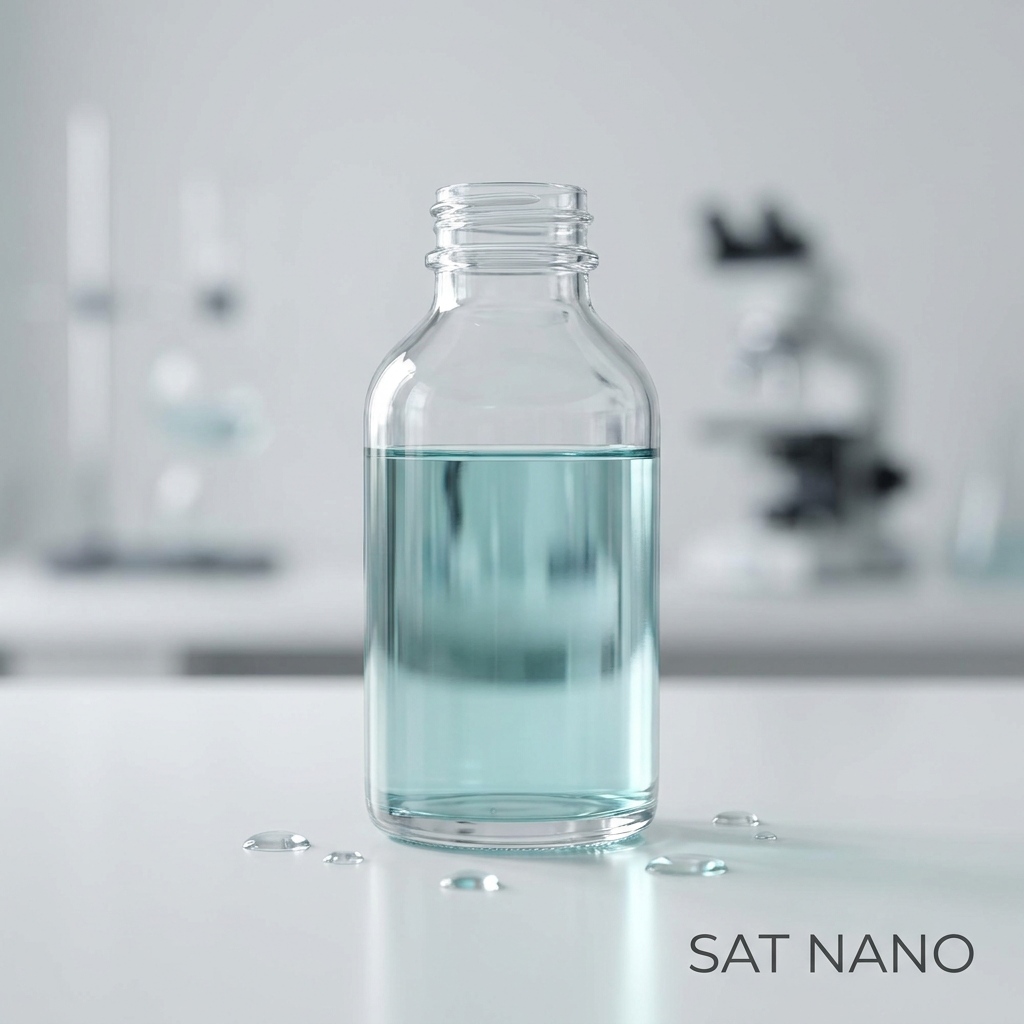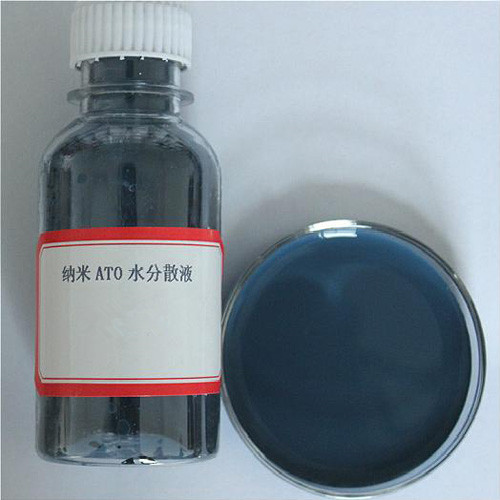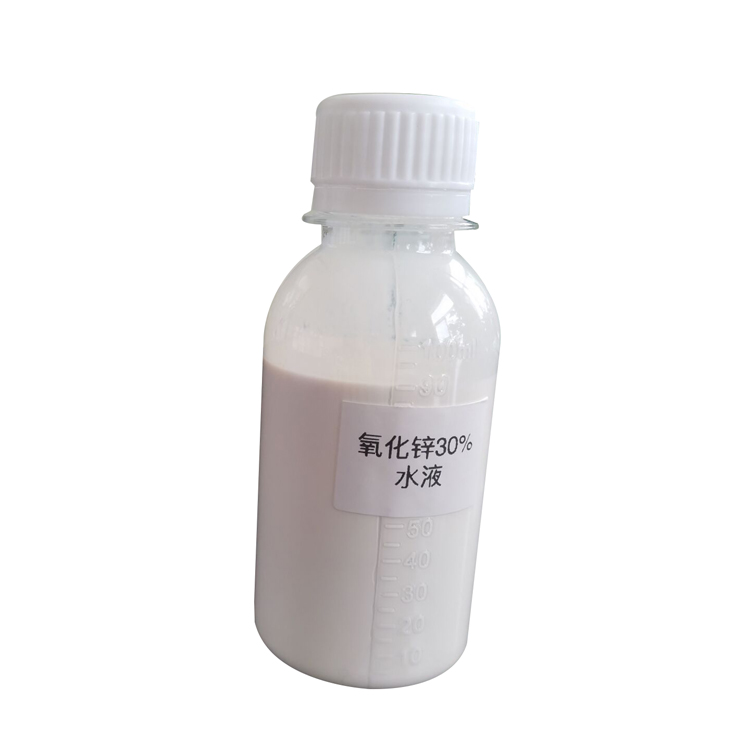

This week, SAT NANO completed an export order to the South Korean market — delivering 1KG of Copper-based Antimicrobial Agent (nano copper dispersion) to a Korean company specializing in antibacterial and disinfection product development. With high-concentration nano copper particles as the active ingredient, this ready-to-use dispersion will support the client's R&D on next-generation antimicrobial coatings and sanitization products.
The bactericidal power of copper is nothing new. As early as ancient Egypt and Rome, copper vessels were used to store water and prevent disease; during the 19th-century cholera pandemics, the significantly lower infection rates among copper miners compared to the general population were documented in the medical literature. In 2008, the U.S. Environmental Protection Agency (EPA) officially registered copper and copper alloys as antimicrobial materials — the first time the EPA had granted such recognition to a solid surface material.
Today, nanotechnology has elevated copper's antimicrobial capability to an entirely new dimension:
When copper particle size drops from the micron scale to 10–20nm, the specific surface area increases by orders of magnitude. At equal mass, nano copper releases Cu⁺/Cu²⁺ at a rate and total quantity far exceeding that of bulk copper — the bactericidal efficiency is in a different league entirely.
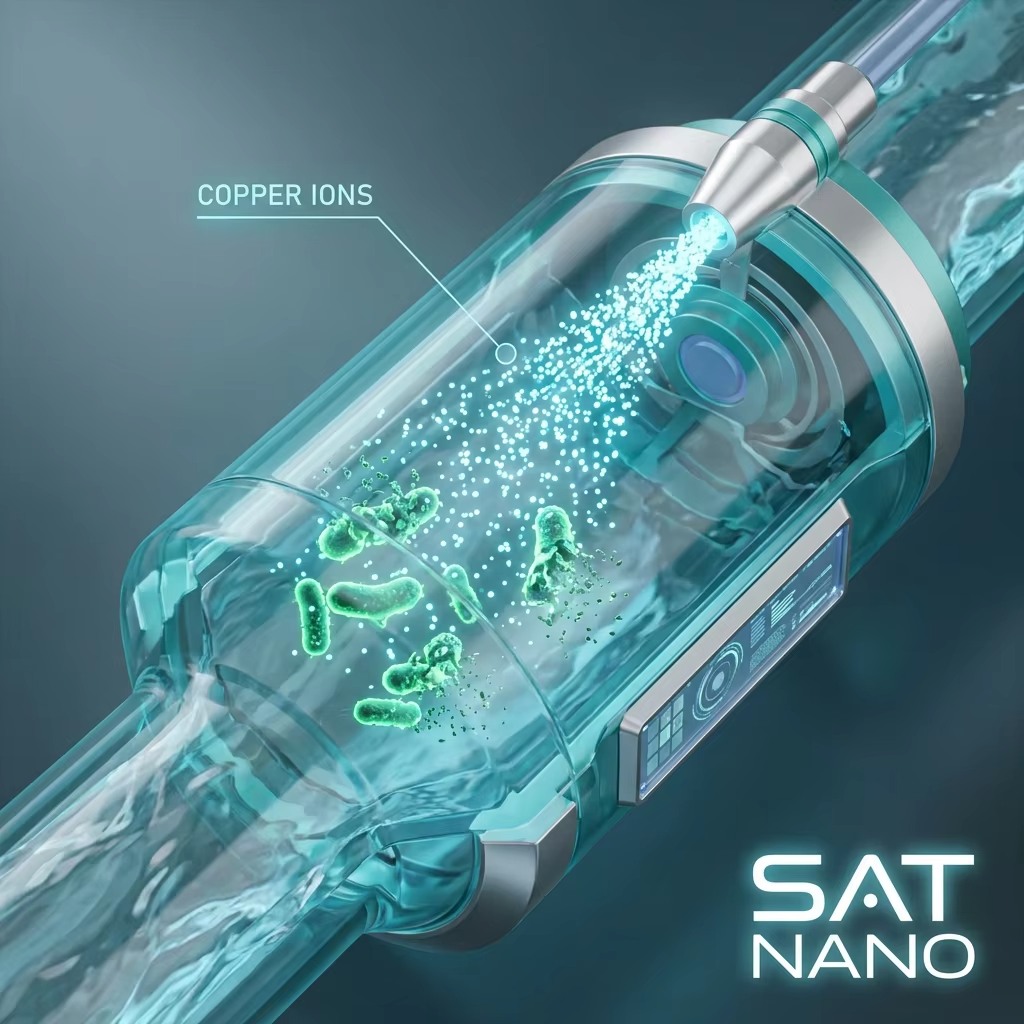
SAT NANO's nano copper antimicrobial dispersion employs a Contact Killing mechanism, inactivating microorganisms through three synergistic pathways:
Positively charged Cu²⁺ ions adsorb electrostatically onto the negatively charged bacterial cell membrane. Copper ions bind to sulfhydryl (-SH) groups in membrane proteins, causing protein denaturation and membrane perforation. Cellular contents — potassium ions, amino acids, nucleic acids — leak out en masse. The bacterium dies within minutes.
Copper ions that penetrate the cell interior catalyze Fenton-like reactions, generating high concentrations of hydroxyl radicals (·OH) and superoxide anions (O₂⁻·). These ROS indiscriminately attack intracellular proteins, lipids, and enzyme systems, inflicting irreversible oxidative damage.
Copper ions cross the nuclear membrane and bind to the phosphate backbone of bacterial DNA/RNA, inducing nucleic acid strand breakage. Even if some bacteria survive the membrane and protein-level attacks, their genetic material has been degraded, rendering them permanently incapable of reproduction — not only killing bacteria, but preventing the emergence of resistant strains.
|
Dimension |
Silver-Based Antimicrobial |
Copper-Based Antimicrobial (SAT NANO) |
|
Cost |
High (precious metal; volatile raw material pricing) |
Low (~1/80 of silver) |
|
Antiviral Activity |
Limited efficacy against non-enveloped viruses |
Destructive to both enveloped and non-enveloped viruses |
|
Kill Speed |
Slower (requires sustained Ag⁺ release) |
Rapid (contact + ROS dual pathway) |
|
Resistance Risk |
Silver-resistant strains already reported |
Multi-mechanism synergy; extremely low resistance probability |
|
Color Stability |
Prone to darkening under prolonged light exposure |
Blue dispersion; color-stable |
|
Parameter |
Specification |
|
Model |
SAT-CUIOP-10N |
|
Active Ingredient |
Nano zero-valent copper particles (Cu⁰) |
|
Particle Size |
10–20 nm |
|
Concentration |
8,000 ppm (customizable from 100–10,000 ppm) |
|
Appearance |
Blue liquid |
|
Dispersion Medium |
Ultrapure water + food-grade stabilizers |
|
pH |
Neutral |
|
Packaging |
1 kg/bottle, 5 kg/drum, or as required |
|
Shelf Stability |
≥ 12 months at ambient temperature, protected from light |
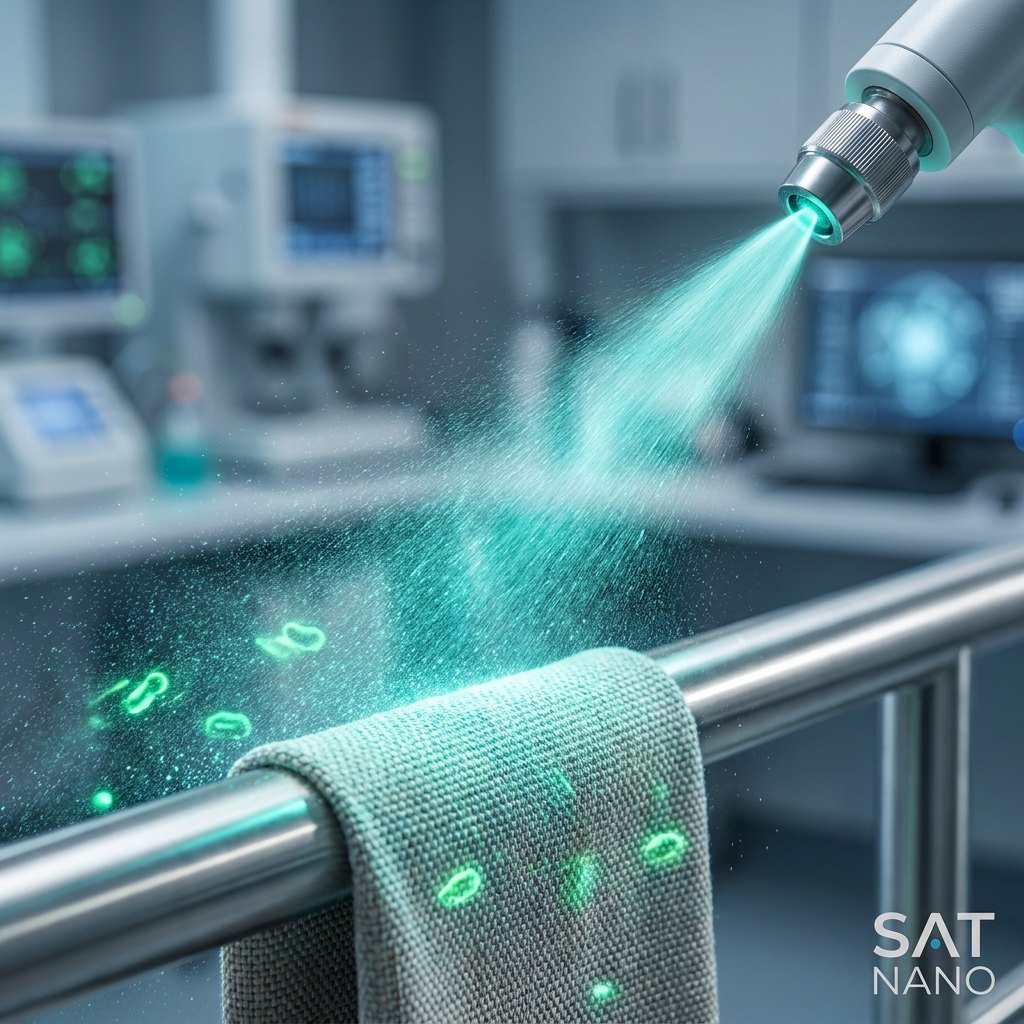
Nano copper dispersion can be applied via spraying, dip coating, or roller coating to high-touch surfaces such as door handles, elevator buttons, public transit handrails, and hospital bed rails. Upon drying, the coating forms a transparent nano copper particle film that delivers 24/7 continuous antimicrobial protection, achieving > 99.9% kill rates against E. coli, S. aureus, and P. aeruginosa.
Applied as a finishing agent to socks, underwear, bedding, and mask filter media, the nano copper dispersion imparts both antibacterial and deodorizing functions (copper ions inhibit odor-causing bacterial metabolism), with excellent wash durability.
Coating activated carbon, ceramic filter cartridges, or hollow-fiber membranes with nano copper effectively inhibits biofilm formation in filtration systems — the primary cause of performance degradation in conventional filtration equipment. South Korea's water purifier and drinking water treatment market, one of Asia's largest, offers a precise industrial entry point for this product.
Antimicrobial modification of air conditioner filters, refrigerator linings, and humidifier water tanks — South Korea's premium home appliance brands continue to show strengthening demand for such functional materials.
Copper ions promote angiogenesis and collagen synthesis, giving them unique value in antimicrobial dressings and surgical suture coatings — simultaneously killing bacteria and accelerating tissue healing.
Replacing conventional organic fungicides for plant fungal disease control (e.g., grape downy mildew), and serving as biofouling inhibitors in marine antifouling paints — copper-based antifouling agents have a half-century track record of global use.
South Korea is among the world's most demanding markets for public health standardization:
Healthcare-associated infection control: Korean hospitals operate rigorous multi-drug resistant organism (MDRO) surveillance systems. Copper-based antimicrobial surfaces, as a passive disinfection physical barrier, are being incorporated into supplementary infection prevention and control protocols.
Consumer product antimicrobial upgrade: From children's tableware to kitchen wipes, "antibacterial" has become a standard selling point in Korean retail. Copper-based antimicrobials, owing to their manageable cost, are well-suited for high-volume additive applications.
Water treatment & membrane technology: South Korea's deep technical expertise in reverse osmosis membranes, water purifiers, and water reclamation aligns closely with the biofilm-inhibiting function of copper antimicrobial coatings.
SAT nano Technology Material Co., Ltd., headquartered in Dongguan, Guangdong, China, specializes in the R&D, production, and sales of nanopowders and micropowders.
If your company is evaluating copper-based or other metal-based antimicrobial solutions, please reach out:
Website: www.satnanomaterial.com
Email: admin@satnano.com
Phone / WhatsApp: +86 13929258449
Address: Xiaqiao Industry, Dongcheng District, Dongguan, Guangdong, China