
This research from Angewandte Chemie addresses the long-standing "Blue Gap" in QLED technology. By transitioning from ultra-small, unstable CdSe cores to a giant gradient alloy structure, the researchers achieved a record-breaking 24% EQE for blue emission.
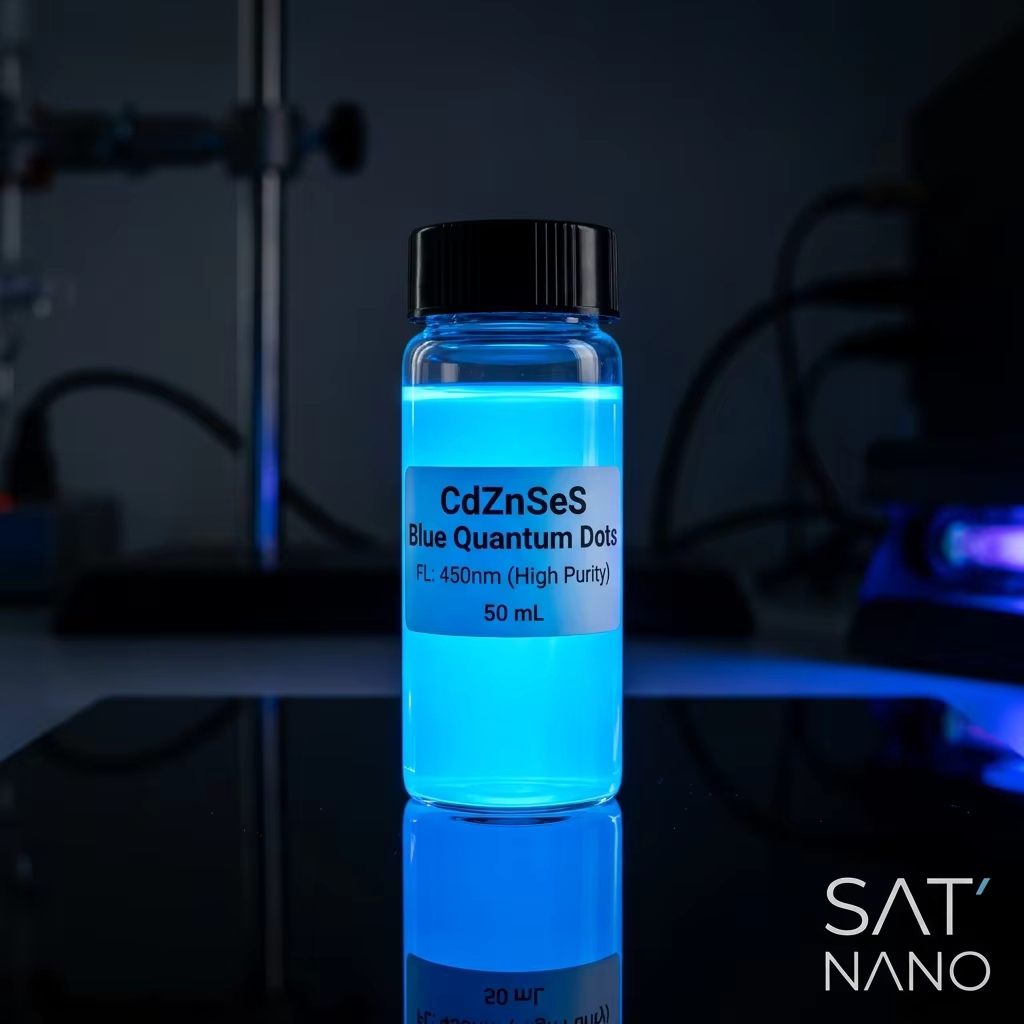
Traditional blue CdSe-based QDs require a core diameter of less than 2nm to achieve blue emission. This small size leads to:
Surface Instability: High surface-to-volume ratio causes easy degradation.
Low Efficiency: Severe lattice strain between the tiny core and shell increases non-radiative recombination.
Auger Recombination: Significant energy loss at high current densities, limiting brightness and EQE.
The project utilizes a Giant Alloy Core strategy to decouple the relationship between size and emission wavelength:
Core Engineering: Diffusion of Zinc (Zn) atoms into a CdSeS core to create a "Giant" CdZnSeS alloy core.
Gradient Composition: A smooth composition gradient from the center to the edge releases lattice strain between the core and the ZnS shell (1-2 monolayers).
Optical Properties:
PLQY: Reaches up to 95%.
Morphology: Highly monodisperse particles.
Mechanism: Suppression of exciton transfer and Auger recombination; lowered Fermi level for improved internal exciton confinement.
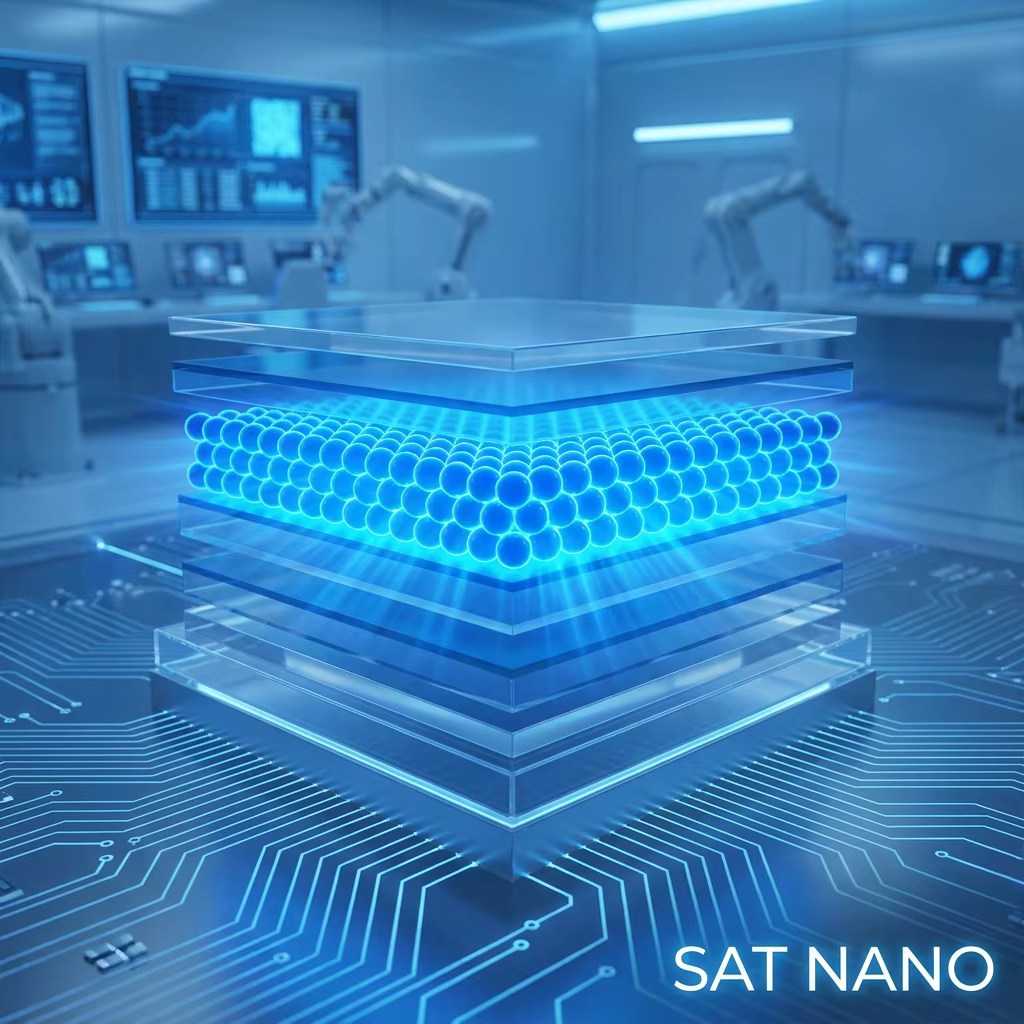
The solution-processed QLED is constructed with a focus on balanced charge injection:
Hole Transport Layer (HTL): Poly(9-vinylcarbazole) (PVK).
Emission Layer (EML): g-CdZnSeS/ZnS Quantum Dots.
Electron Transport Layer (ETL): ZnMgO nanoparticles.
Cathode/Anode: Standard transparent and metallic electrodes.
The g-CdZnSeS/ZnS QLED outperforms conventional core/shell blue QLEDs (which typically peak at ~8% EQE):
External Quantum Efficiency (EQE): Peak of 24% (a 3x improvement).
Peak Brightness: ~57,000 cd/m².
Turn-on Voltage: ~3.8 V.
Color Stability: Stable Electroluminescence (EL) peak at 479 nm across a wide voltage range (3–9V).
Reproducibility: Confirmed across 48 devices with EQE consistently between 21% and 24%.
Operational Lifetime (T₅₀):
At 8,000 cd/m²: 10 hours.
At 100 cd/m² (display brightness): Extrapolated to ~27,000 hours, meeting commercial potential for display applications.
This method provides a roadmap for:
Stable Blue Emission: Moving away from unstable <2nm cores.
Strain Engineering: Using gradient alloys to minimize internal defects.
Auger Suppression: Enabling high-brightness operation without efficiency roll-off.