
This research from Advanced Functional Materials provides a breakthrough strategy for overcoming the performance bottlenecks of Carbon Quantum Dots (CQDs). Based on this article, I have structured a technical proposal for a High-Performance LED Development Scheme using Matrix-Induced Emission Enhancement (MIE) technology.
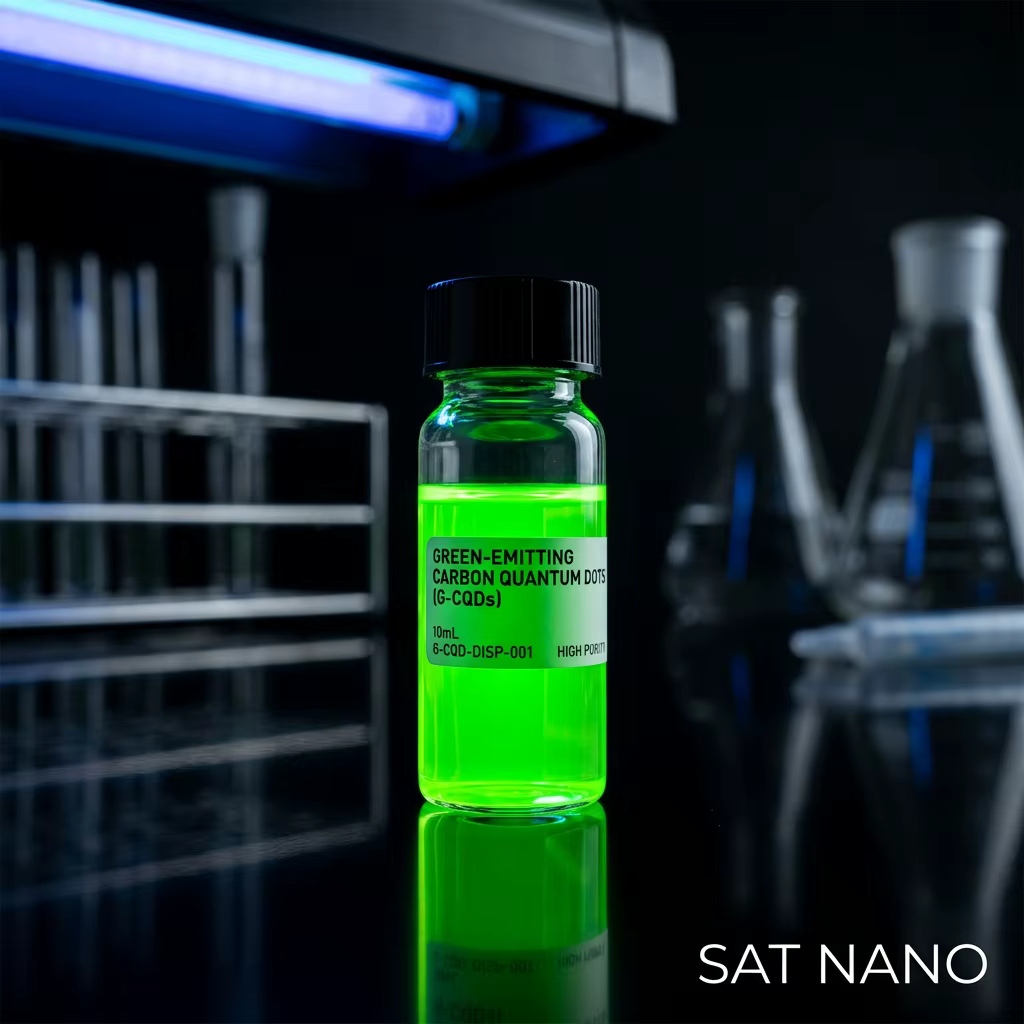
Traditional Carbon Quantum Dots (CQDs) suffer from severe Aggregation-Caused Quenching (ACQ), where their high photoluminescence quantum yield (PLQY >80% in solution) drops drastically in solid-state films. This limitation results in low-efficiency LED devices compared to heavy-metal-based QDs. Objective: To develop a new class of MIE-CQDs that utilize matrix interaction to enhance solid-state emission, achieving high-brightness, sustainable, and heavy-metal-free electroluminescent devices.
The core innovation lies in the transition from planar to non-planar molecular structures to restrict non-radiative loss.
Precursors: 2,5-dimethoxybenzene-1,4-dicarboxaldehyde (DMDD) and 2-naphthylacetonitrile.
Method: Solvothermal synthesis.
Environment: Strong alkaline ethanol conditions.
Key Feature: The resulting MIE-CQDs possess a unique non-planar geometry that limits intramolecular rotation/vibration when embedded in a matrix.
Unlike conventional CQDs, MIE-CQDs exhibit Matrix-Induced Emission Enhancement (MIE):
Dilute Solution: ~15% PLQY (low due to active intramolecular motion).
Solid Powder: ~31% PLQY.
Polymer Matrix (e.g., PMMA): >70% PLQY.
Mechanism: The polymer matrix acts as a rigid "cage," restricting intramolecular movements and suppressing non-radiative recombination, effectively channeling energy into radiative pathways.
To maximize carrier injection and exciton utilization, a solution-processed multi-layer architecture is proposed:
Emission Layer (EML): MIE-CQDs doped into a Thermally Activated Delayed Fluorescence (TADF) host, specifically CzAcSF.
Benefit: This combination ensures efficient triplet exciton harvesting and Förster Resonance Energy Transfer (FRET).
Electron Transport Layer (ETL): PO-T2T.
Device Performance Targets:Green Emission (510 nm): Peak brightness >10,000 cd m⁻², Current Efficiency of 20 cd A⁻¹, and EQE >7%.
Long-wavelength Emission (603 nm): Direct MIE-CQD active layer achieving a record brightness of 8,366 cd m⁻².

This scheme represents a paradigm shift in CQD design:
Sustainability: Eliminates the need for toxic heavy metals (Cd, Pb) or rare earth elements.
Processability: Fully compatible with low-cost, large-area solution processing (spin-coating, inkjet printing).